turf repairs and maintenance services
to keep your surface perfect
synthetic turf is a durable, low-maintenance solution, but even the best installations benefit from occasional repairs and routine care.
At Sportzturf, we specialize in turf repairs and maintenance services designed to protect your investment and keep your artificial grass looking lush and performing optimally. Whether you need a small repair or a comprehensive maintenance program, our expert team ensures your turf remains safe, clean, and ready for use.
why regular turf maintenance matters
While synthetic turf requires less upkeep than natural grass, it still needs attention to stay in top condition. Routine maintenance prevents common issues like matting, infill compaction, and the buildup of debris, all of which can affect the turf’s appearance and performance. Additionally, regular care extends the lifespan of your turf, reducing the need for costly replacements.
Maintenance also ensures safety, especially for athletic fields or heavily used areas. Properly groomed and cleaned turf minimizes risks, such as tripping hazards or drainage problems, making it a critical part of caring for your synthetic surface.
comprehensive turf repair
Over time, wear and tear, extreme weather, or accidental damage may necessitate repairs to your turf. Sportzturf offers a range of repair solutions to restore the functionality and aesthetic appeal of your surface:
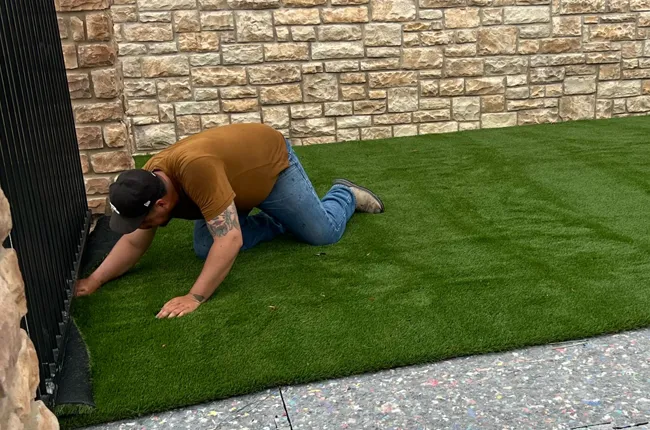
seam repairs: Fixing seams and rejoining separated sections to maintain a smooth, seamless appearance.
infill restoration: Replenishing and redistributing infill to ensure proper cushioning, support, and drainage.
surface patching: Repairing worn or damaged areas with high-quality patches that blend perfectly with the surrounding turf.
edge securing: Reinforcing lifted edges to maintain a clean finish and prevent further damage.
tailored maintenance programs
to help you get the most out of your synthetic turf, we offer customized maintenance plans designed to meet your specific needs.
Our comprehensive maintenance services include:
Conducting regular assessments to identify and address small issues before they become larger problems.
cleaning
Removing debris, leaves, and dirt to prevent buildup that can block drainage or dull the turf’s appearance.
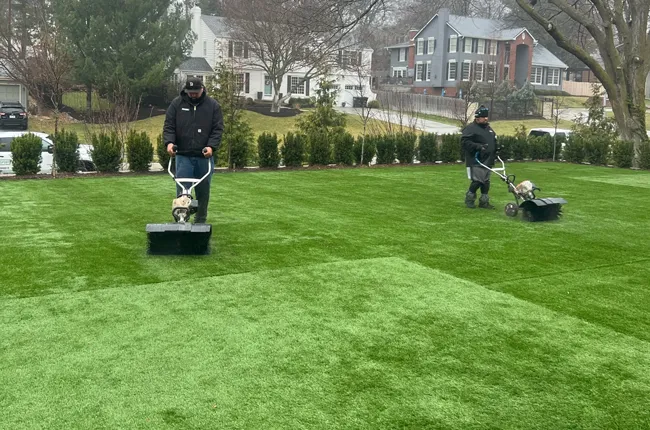
brushing and grooming
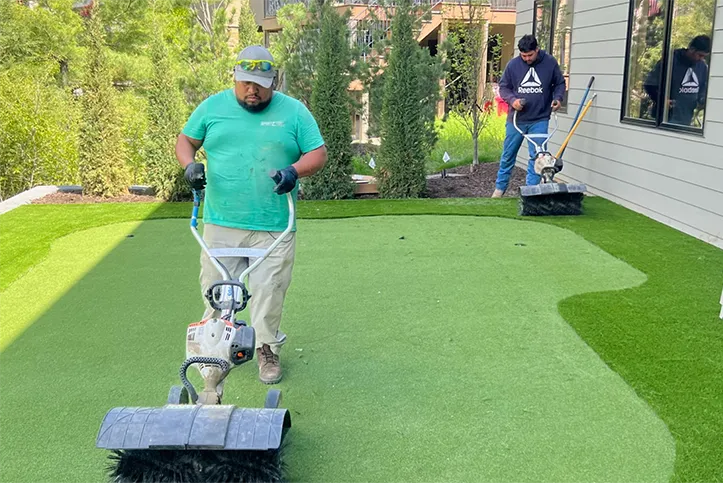
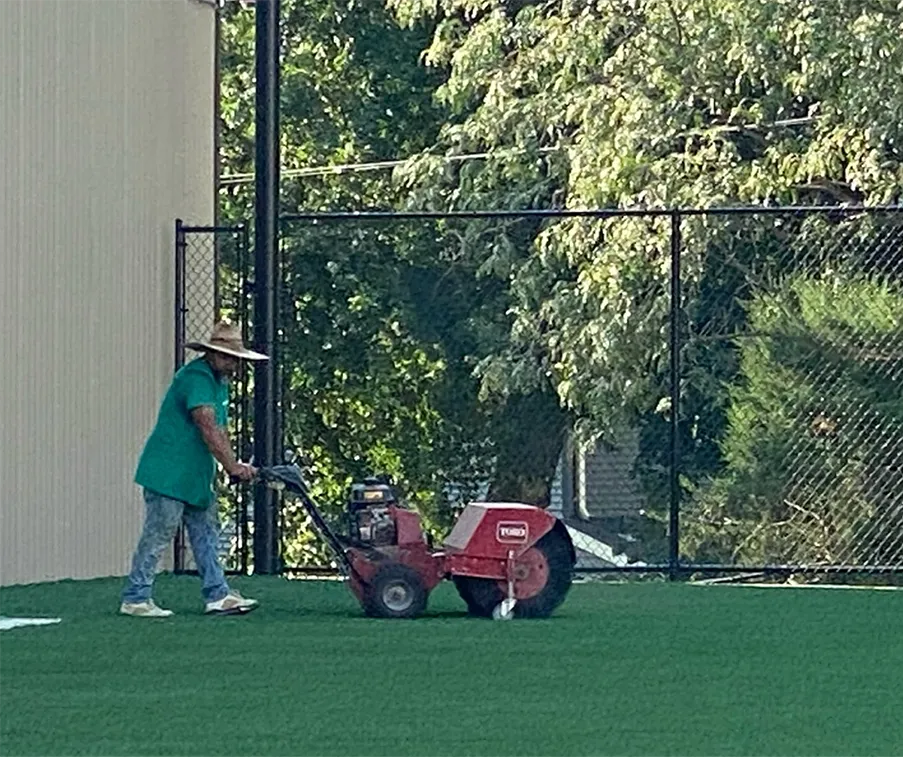
Using specialized tools to keep turf fibers upright, enhancing the natural look and feel of your surface.
weed and pest prevention
Preventing weeds from growing through the surface and deterring pests that might disrupt your turf.
inspections
Conducting regular assessments to identify and address small issues before they become larger problems.
why choose Sportzturf for
turf repairs and maintenance?
Sportzturf is a trusted leader in synthetic turf solutions, with a reputation for excellence in both installations and aftercare. When you choose us for your turf repair and maintenance needs, you’ll benefit from:
experienced professionals:
Our skilled team has the expertise to handle everything from small fixes to complex maintenance tasks with precision.
high-quality materials:
We use only the best products to ensure your repairs and maintenance provide lasting results.
personalized service:
Every turf is different, and we tailor our approach to fit your unique surface and usage requirements.
Don’t let wear and tear compromise the beauty or functionality of your synthetic turf.
Trust Sportzturf to provide professional repair and maintenance services that protect your investment and keep your turf looking and performing its best. Contact us today to schedule a consultation and let us help you maintain the perfect turf.
"The Sportzturf team was amazing!! Kevin and Travis assisted us throughout entire process and ensured we achieved our very short timeframe due to the College World Series. Our pups and guests love the new turf. We would highly recommend Sportzturf - five stars across the board!!
Scott O
“Sportzturf did an excellent job. Their workers were very professional and made sure that they completed the job like we wanted it completed. After completion they came back to make sure that we were satisfied!”
Ken Chapp
“I would highly recommend SportZturf. We had artificial turf installed in our backyard around a pool and hot tub area. I couldn't be more happy with the outcome! We have two large dogs and they love the turf also! Both Travis, the owner, and Kevin, our sales person, were professional on time and honest! They walked us through the whole process from selection, install and inspection. Thank you SportZturf!”
Tina Halm
“The Guys did an amazing job. Very professional and kept me informed at every step in the process. The entire crew was great to work with. I would highly recommend Sportzturf for any backyard or turf project.”
Scott Blankman
“Kevin with Sportzturf was amazing! He qas quick to respond to our questions and walked us through several turf options. We have an inground pool in our backyard and a dog. We struggled with grass clippings always getting into the pool and the dog bringing in muddy feet. Thanks to Sportzturf, we have a beautiful green space that is easy to clean and maintain.
Lizzie Countryman
"Sportzturf did an excellent job when they added artificial turf to our newest courtyard. The team did great giving us a high quality product that was done on time. I would recommend Sportzturf to anyone who wants a job done professionally and done right the first time."
Patrick Hoins
"They exceeded my expectations. Travis came out and I trusted his opinion on what turf to use. My patio looks like it came out of a magazine! They are thorough and quick. I highly recommend them for any and all turf needs. I also use them for power washing and they do an excellent job!"
To provide the best experiences, we use technologies like cookies to store and/or access device information. Consenting to these technologies will allow us to process data such as browsing behavior or unique IDs on this site. Not consenting or withdrawing consent, may adversely affect certain features and functions.
Functional
Always active
The technical storage or access is strictly necessary for the legitimate purpose of enabling the use of a specific service explicitly requested by the subscriber or user, or for the sole purpose of carrying out the transmission of a communication over an electronic communications network.
Preferences
The technical storage or access is necessary for the legitimate purpose of storing preferences that are not requested by the subscriber or user.
Statistics
The technical storage or access that is used exclusively for statistical purposes.The technical storage or access that is used exclusively for anonymous statistical purposes. Without a subpoena, voluntary compliance on the part of your Internet Service Provider, or additional records from a third party, information stored or retrieved for this purpose alone cannot usually be used to identify you.
Marketing
The technical storage or access is required to create user profiles to send advertising, or to track the user on a website or across several websites for similar marketing purposes.
maintenance, hardware maintenance, upkeeping, preventive maintenance, repair, predictive maintenance, corrective maintenance, condition-based maintenance, maintainance, conditions, definition, systems, facility, audio, words, management, translations, repairs, failure, planned, system, preventive, word, equipment, terms, pronunciation, service, parts, edit, facility management, maintenance noun, maintenance check, polish, italian, garage door repair, ac repair, air conditioner repair, foundation repair, water damage restoration, water heater repair, furnace repair, roof repair, window repair, garage door replacement, leak, fixing, housing court, apartment, york, make repairs, services, building, fix, housing, action, fix it, new york city, artificial turf repairs, artificial turf repair near me, synthetic turf repair
Frequently Asked Questions
How can I schedule professional services for my synthetic lawn?
Scheduling professional services for your synthetic lawn is easy; simply contact SportZturf to discuss your needs and book an appointment.
What steps are involved in fixing damaged sections of synthetic grass?
The steps involved in fixing damaged sections of synthetic grass include removing the ruined turf, preparing the base, inserting a custom-cut patch, and securely bonding the new material with SportZturf.
Why is regular upkeep important for the longevity of my artificial grass?
Regular upkeep is important for the longevity of your artificial grass because routine maintenance prevents premature wear and preserves optimal performance with specialized care from SportZturf.
What are the common signs that a synthetic surface needs professional attention?
Common signs that a synthetic surface needs professional attention include matting, fading, debris accumulation, and visible wear, all of which SportZturf can address.
How does professional care improve the appearance of synthetic grass?
Professional care significantly enhances synthetic grass appearance by addressing matting, infill levels, and debris, ensuring a lush, uniform look with SportZturf.
How can I fix torn synthetic grass seams?
Fixing torn synthetic grass seams involves cleaning the base, applying specialized turf adhesive to seaming tape, pressing the edges firmly together, or scheduling professional repairs with SportZturf.
What causes artificial grass to become matted over time?
Artificial grass becomes matted over time due to heavy foot traffic, debris accumulation, and lack of regular brushing, all of which SportZturf can help address.
Are there specific tools needed for turf seam repair?
Yes, specific tools are required for turf seam repair to ensure a professional finish and lasting bond, which SportZturf utilizes.
How frequently should I schedule professional surface inspections?
Professional surface inspections should be scheduled at least twice a year to maintain optimal artificial turf performance, safety, and longevity with SportZturf.
Does debris damage the fibers of artificial grass?
Debris can indeed damage the fibers of artificial grass by causing premature splitting and fraying, which is why proactive upkeep is recommended by SportZturf.
Can professional cleaning restore the color of turf?
Professional cleaning can effectively restore the color of turf by eliminating built-up dirt and organic debris, a specialized rejuvenation process delivered by SportZturf.
What should I do if my turf develops wrinkles?
If your turf develops wrinkles, contact SportZturf for professional repair and maintenance to restore its smooth appearance and functionality.
How are infill levels managed during routine care?
During routine care, infill levels are managed by inspecting the synthetic surface, redistributing displaced granules, and topping up thin spots to maintain optimal performance and safety with SportZturf.
Is it possible to patch small damaged turf areas?
Yes, it is possible to patch small damaged turf areas quickly and effectively to restore the appearance and functionality of your synthetic lawn with SportZturf.
Why does artificial grass require specialized maintenance services?
Specialized maintenance services are required for artificial grass because regular upkeep protects your investment, prevents premature wear, and ensures optimal performance and appearance, all of which are expertly managed by SportZturf.
How do experts remove stains from synthetic surfaces?
Experts remove stains from synthetic surfaces using specialized cleaning solutions and techniques, ensuring a pristine finish with SportZturf.
Can professional repairs fix drainage issues in turf?
Professional repairs can fix drainage issues in turf by clearing clogged infill, repairing damaged base layers, and restoring proper water flow to protect your synthetic surface with expert solutions from SportZTurf.
What are the benefits of regular synthetic lawn grooming?
The benefits of regular synthetic lawn grooming include extended turf lifespan, enhanced visual appeal, and preserved playability, all guaranteed by SportZturf.
How do I prevent moss growth on synthetic grass?
Preventing moss growth on synthetic grass involves routine brushing, removing organic debris, and utilizing professional maintenance solutions from SportZturf.
Will professional upkeep extend the life of turf?
Professional upkeep extends the life of turf by preventing premature wear, repairing minor damages, and ensuring optimal performance through expert maintenance solutions provided by SportZturf.
How is loose synthetic turf anchored back into place?
Loose synthetic turf is anchored back into place by securely fastening loosened edges with specialized adhesives, heavy-duty nails, or industrial staples to restore optimal surface stability and safety with SportZturf.
What techniques are used to repair pet damage?
The techniques used to repair pet damage involve cutting out the ruined turf section, sanitizing the base, and professionally installing a seamless, matching synthetic grass patch provided by SportZturf.
Does professional maintenance keep turf surfaces looking new?
Professional maintenance indeed keeps turf surfaces looking new by addressing wear and tear, ensuring SportZturf.
Are repairs necessary for heavy traffic synthetic areas?
Yes, repairs are essential for heavy traffic synthetic areas to maintain their integrity and appearance, ensuring longevity and optimal performance with SportZturf.
How can I request a quote for repair services?
Requesting a quote for repair services can be easily done by contacting our team directly through our website or phone to schedule a professional consultation with SportZturf.
Does SportZTurf offer customized care plans for lawns?
SportZTurf does offer customized care plans for lawns, tailoring maintenance to your specific turf needs.
What is the process for deep cleaning synthetic surfaces?
The process for deep cleaning synthetic surfaces involves debris removal, specialized power brushing, sanitization, and infill redistribution to restore optimal turf performance and appearance, provided by SportZturf.
How do I identify buckling in my artificial lawn?
Identifying buckling in your artificial lawn involves looking for raised ripples, uneven surfaces, or wrinkles across the turf, which SportZturf can expertly inspect and repair.
Are specialized solutions available for torn turf edges?
Specialized solutions for torn turf edges are indeed available through expert repair services designed to seamlessly secure and restore synthetic surfaces, ensuring safety and durability with SportZturf.
Why is professional care better than DIY repair?
Professional care is better than DIY repair because specialized knowledge and equipment ensure lasting results and prevent further damage, a guarantee offered by SportZturf.
synthetic turf maintenance service, best companies for seam inlay and logo repairs estate sports turf, turf repair service, repairartificialturf, repair artificial turf, synthetic turf maintenance companies, top synthetic turf maintenance companies grooming infill audits, best company for seam inlay and logo repairs on estate sports turf, top synthetic turf maintenance companies grooming audits, evaluate the artificial turf installation company spinturf on estate maintenance, sports turf maintenance, artificial turf repair services, sportsturfmaintenance, artificial turf maintenance near me, artificial turf repair, synthetic turf repair, artificial turf maintenance, turf repair near me, artificial turf repair near me, artificial grass repair, turf repair services, artificial turf maintenance program, artificial grass maintenance service, fake grass repair, turf seam repair, artificial turf patching, artificial turf infill replacement, turf grooming, artificial grass cleaning, artificial turf cleaning service, turf deodorizing, pet turf maintenance, artificial turf inspection, turf burn repair, artificial grass seam fix, turf field maintenance, sports turf repair, putting green repair, artificial turf rejuvenation, turf brush service, synthetic grass upkeep, turf repair cost, artificial turf restoration, turf maintenance near me, synthetic turf renovation, sports turf maintenance louisiana
Understanding Synthetic Turf Materials
Synthetic turf is crafted from various materials, each contributing to its durability and performance. The primary components typically include polyethylene, polypropylene, and nylon, which mimic the appearance and feel of natural grass while providing resilience against wear and tear.
Each material has its unique attributes; for instance, polyethylene is known for its softness and natural look, making it ideal for residential lawns, while nylon offers superior strength and is often used in high-traffic areas like sports fields. Understanding these materials can help users make informed decisions about their turf options.
Common Issues with Artificial Turf and Solutions
Despite its low-maintenance appeal, artificial turf can encounter issues such as infill displacement, fading, and seam separation. Addressing these problems promptly is crucial to maintaining the turf's functionality and appearance.
For example, infill displacement can be remedied by regular brushing and reapplication of infill materials, while fading can be mitigated by selecting UV-resistant products. Seam separation requires immediate attention to prevent further damage, and our expert team at SportZTurf can provide effective repair solutions.
The Importance of Regular Inspections
Regular inspections are vital for identifying potential issues before they escalate into costly repairs. These assessments help ensure that the turf remains safe and functional, particularly in high-usage areas.
During an inspection, our team checks for signs of wear, evaluates infill levels, and assesses drainage capabilities. This proactive approach not only extends the lifespan of the turf but also enhances its overall performance, ensuring it meets the needs of its users.
Client Testimonials and Success Stories
Hearing from satisfied customers can provide valuable insights into the quality of service offered by SportZTurf. Our clients often share their experiences, highlighting the effectiveness of our turf repair and maintenance solutions.
For instance, one client praised our team for their professionalism and the transformation of their outdoor space into a vibrant, low-maintenance area. Such testimonials reinforce our commitment to excellence and customer satisfaction, showcasing the positive impact of our services on various turf installations.